Denver Affordable Housing Challenge
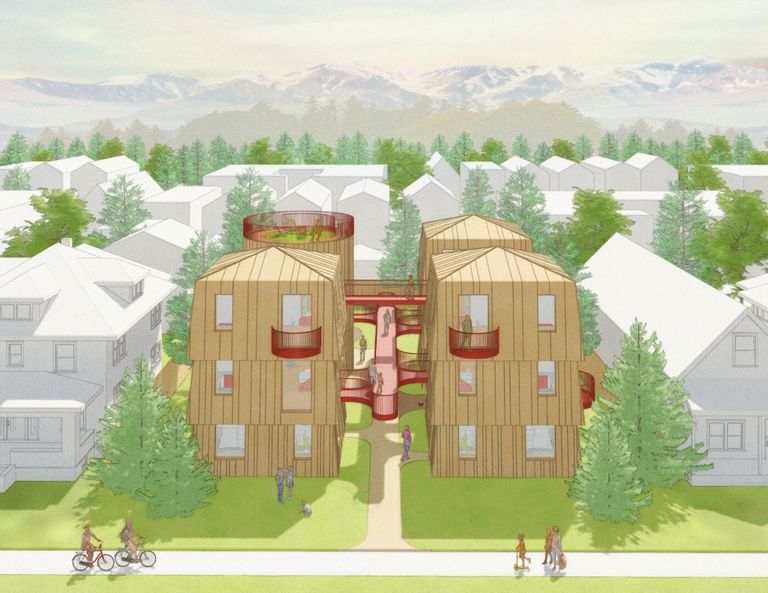
Reimagining urban living through prefabricated construction, the proposal merges modern efficiency with Denver’s historic character. Inspired by the Denver four-square, a typology celebrated for its efficient form and enduring symbolism of home, the design honors local heritage while shaping a sustainable, adaptable future.
At its center is a shared community space where residents gather and connect, reflecting Denver’s collaborative spirit. Sustainability is integral: each unit is constructed from mass plywood, a renewable, low-carbon material that combines strength, warmth, and efficiency. Prefabrication enhances precision and minimizes waste, and the 4‑foot modular system maximizes the use of full material sheets.
Each development responds to the scale and rhythm of its neighborhood, while stacked and arranged modules allow varied densities and forms. Together, these strategies establish a vibrant, resilient community rooted in place, history, and possibility.
Four-Square 2.0
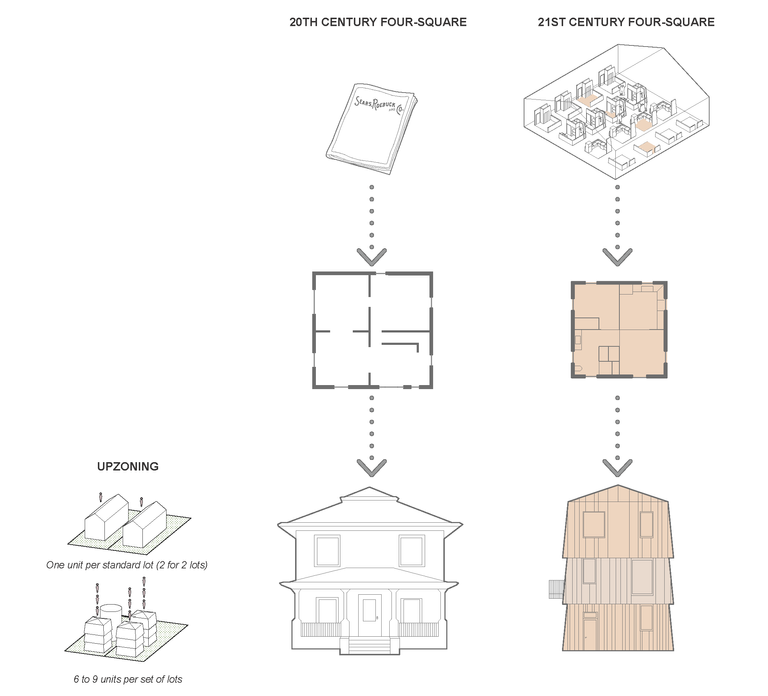
Drawing on early 20th century architectural traditions, the concept reinterprets the Denver four-square, a pragmatic housing type defined by its boxy form, functional layout, and kit-of-parts construction. Many of these original homes were designed to be ordered directly from the Sears, Roebuck and Co. catalog, allowing for rapid, standardized construction that met Denver’s growing housing needs. Rooted in this legacy of efficiency and adaptability, the contemporary reinterpretation transforms the four-square into a modern prefabricated system that maintains the spirit of accessible, thoughtfully designed housing.
Today, with urban expansion, housing pressures, and climate challenges, the project revisits the four-square’s spirit through a contemporary lens. The typology is reinterpreted as a 21st century prefabricated system that is modular, flexible, and future-ready. These new kits enable rapid, precise, and sustainable construction while supporting diverse configurations that reflect individual and neighborhood identities. The system is designed to scale and evolve, responding to changing needs without sacrificing community cohesion.
This reimagining bridges Denver’s architectural heritage with its future ambitions, redefining housing as a way for people to live together efficiently, beautifully, and with a strong sense of community and place.
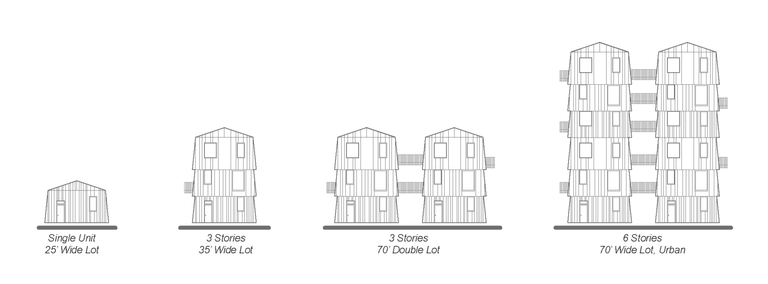
Scalability
In response to Denver’s growing housing demand, the project employs strategic upzoning to increase density while maintaining livability. Modular, stackable mass plywood units enable rapid, sustainable construction and adapt to diverse site sizes and neighborhood contexts. The modular framework optimizes material use and allows flexible configurations from small infill lots to larger community developments, ensuring each site is addressed efficiently.
Downsizing individual units while consolidating shared resources, such as communal laundry, gardens, and fitness areas, fosters social interaction and reduces construction and maintenance costs. The resulting model is a scalable, context-sensitive system that balances efficiency, affordability, and community, offering a replicable framework for sustainable urban growth across Denver.
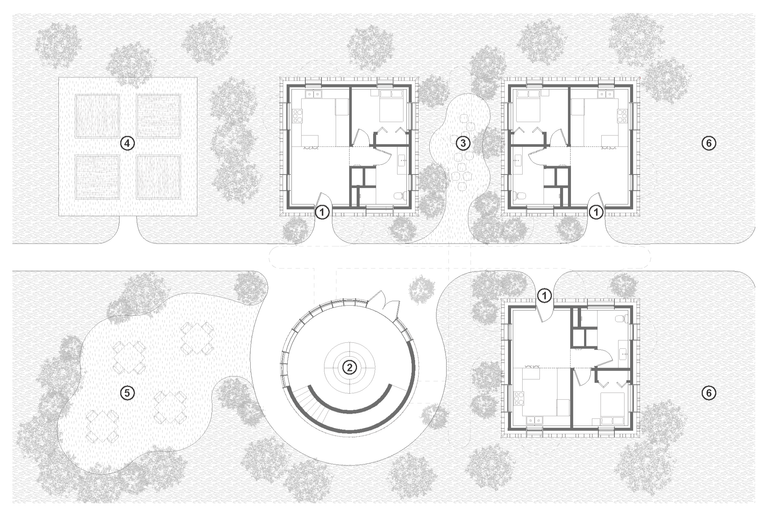
Site Plan
1. Prefabricated Housing Module
2. Prefabricated Amenity Cylinder
3. Community Play Area
4. Community Garden
5. Community Plaza
6. Lawn Areas
Four-square Stacked
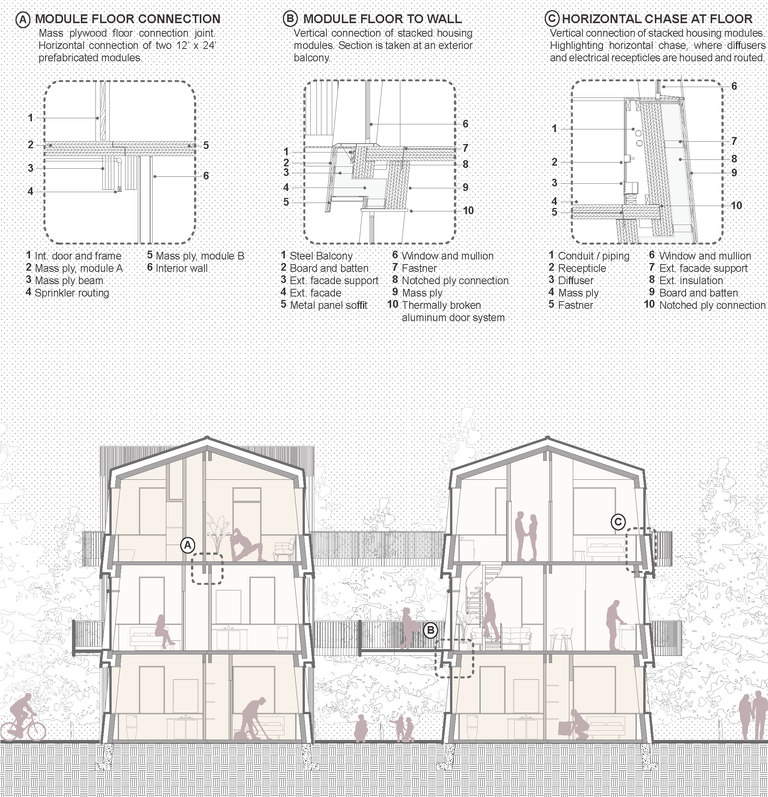
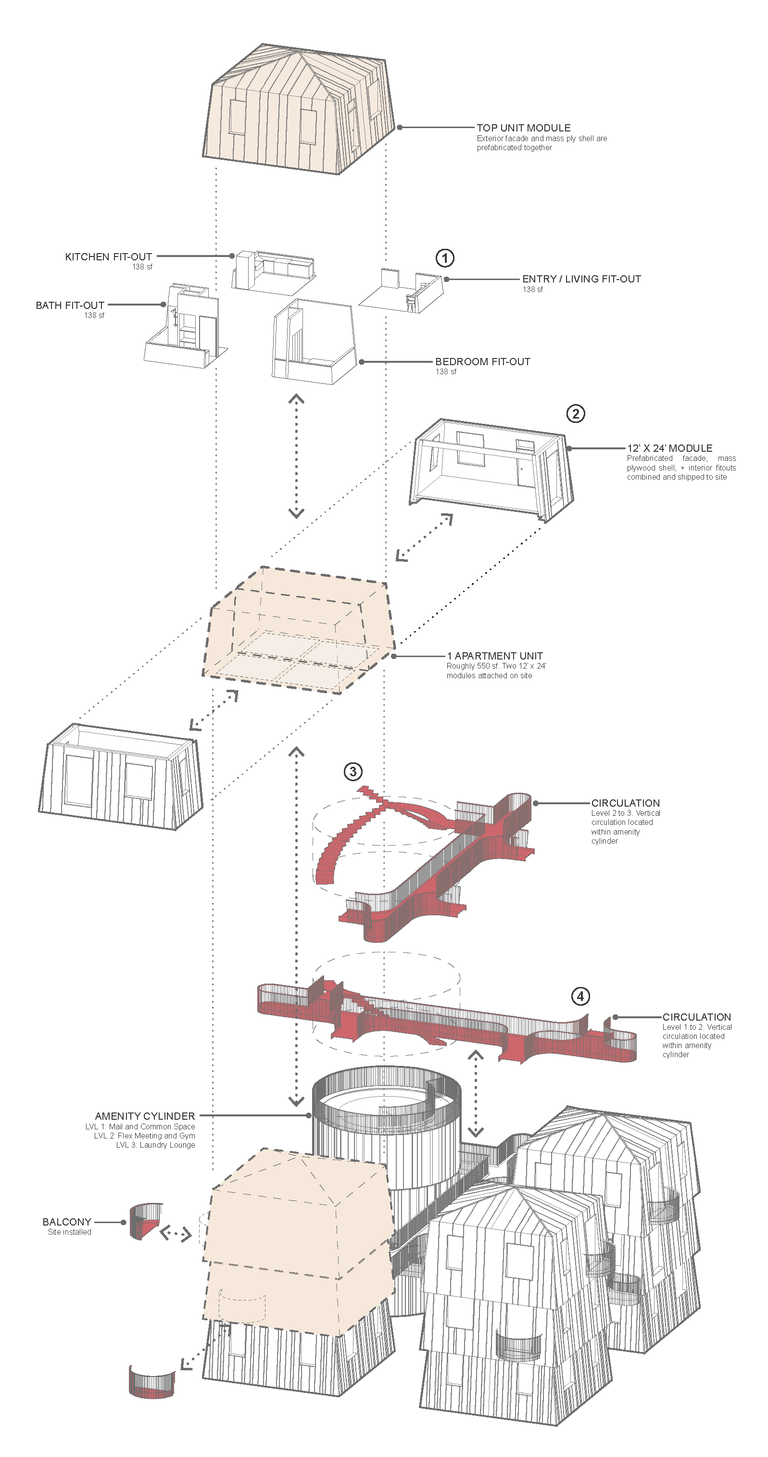
To achieve truly affordable housing, the design uses a prefabricated system based on a 4‑foot module, maximizing material efficiency and reducing waste. Each unit is a self-supporting structural module that can be stacked vertically without extra framing or complex connections. Made from mass plywood, a renewable low-carbon material, the system provides strong performance while supporting sustainable, resource-conscious building practices.
1. Interior Fit-Outs
Each module is composed of four prefabricated fit-outs: entry/living spaces, kitchen, bedroom, and bathroom /storage. Together, they form a complete, flexible, and self-contained domestic unit that can adapt to different layouts, site conditions, and resident needs.
2. Prefabricated Modules
The modules are formed from a pair of mass plywood shells, each measuring 12’ x 24’. This sizing optimizes fabrication and transport while minimizing material waste. Once on site, the two shells join to create a 24’ x 24’ living unit, an efficient 550-square-foot dwelling that maximizes usable space within a compact footprint.
3. The Amenity Cylinder
Circulation and shared programs converge within a central amenity cylinder that anchors the four-square layout. This hub houses communal spaces such as the mail room, laundry, gym, & lounge, transforming daily routines into moments of connection. Vertical circulation within the cylinder reinforces flow while activating shared spaces, fostering a sense of collective identity & accessibility.
4. Exterior Circulation
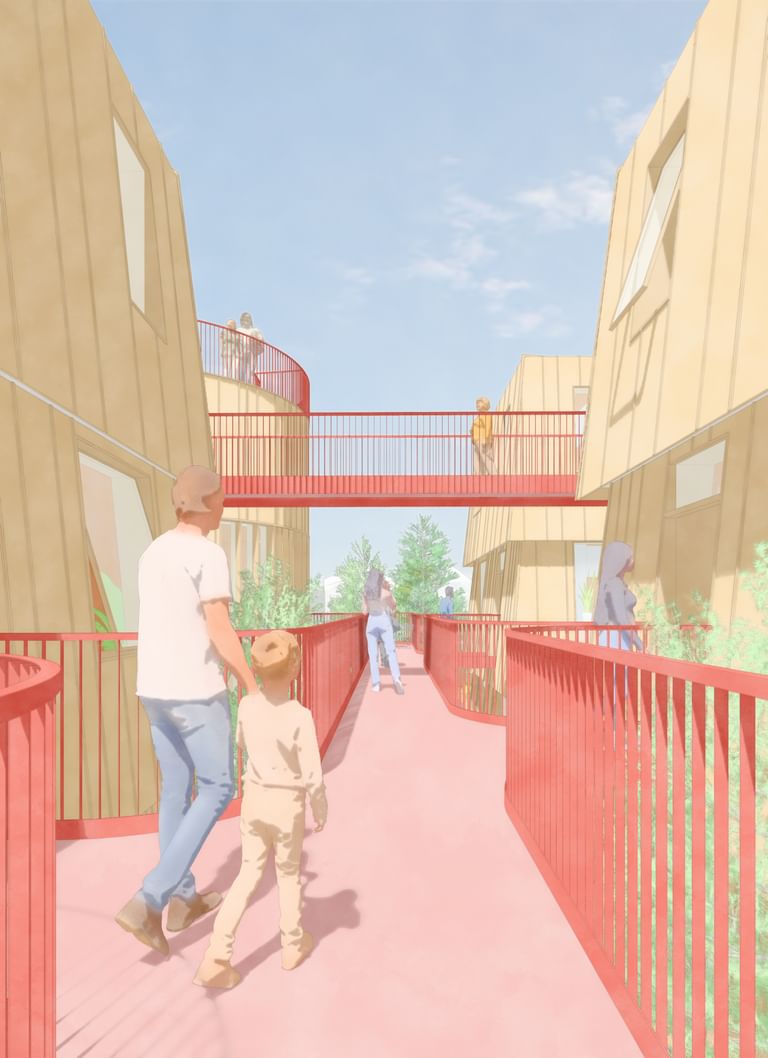
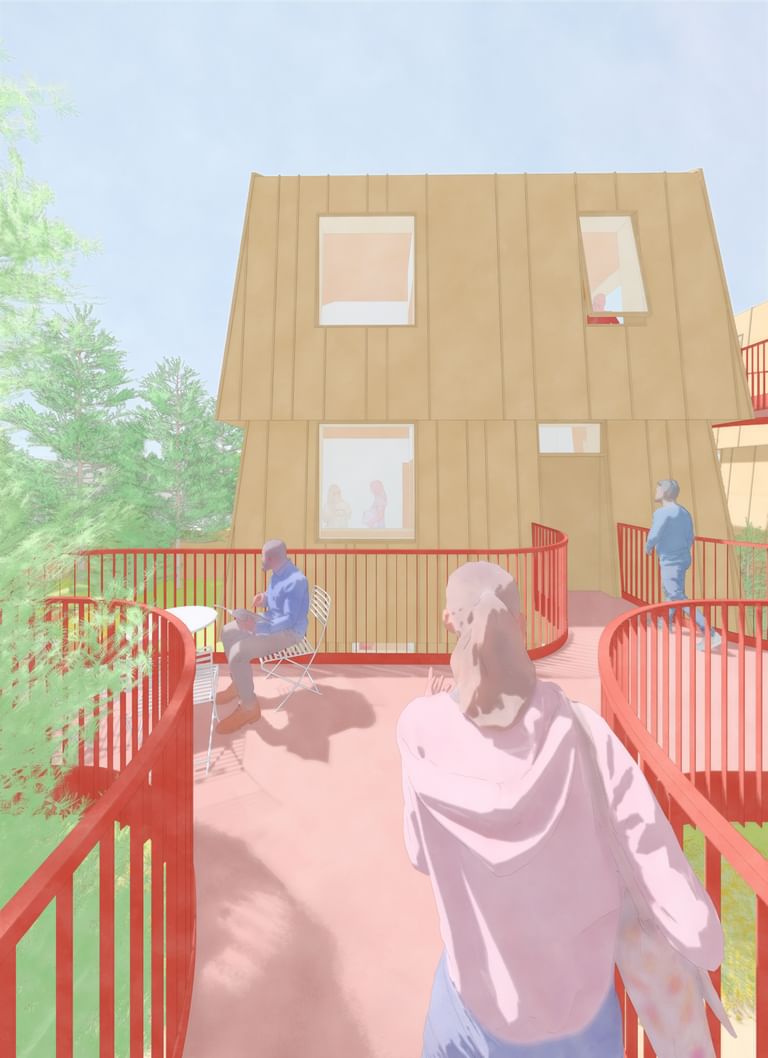
Horizontal circulation is moved outside, opening interior areas for living and redefining movement as a shared experience. Exterior walkways serve as social thresholds, promoting interaction & neighborly exchange. Together, these strategies frame housing as more than shelter, offering a scalable model for community, affordability, and sustainable urban living.
Climate-Responsive Form
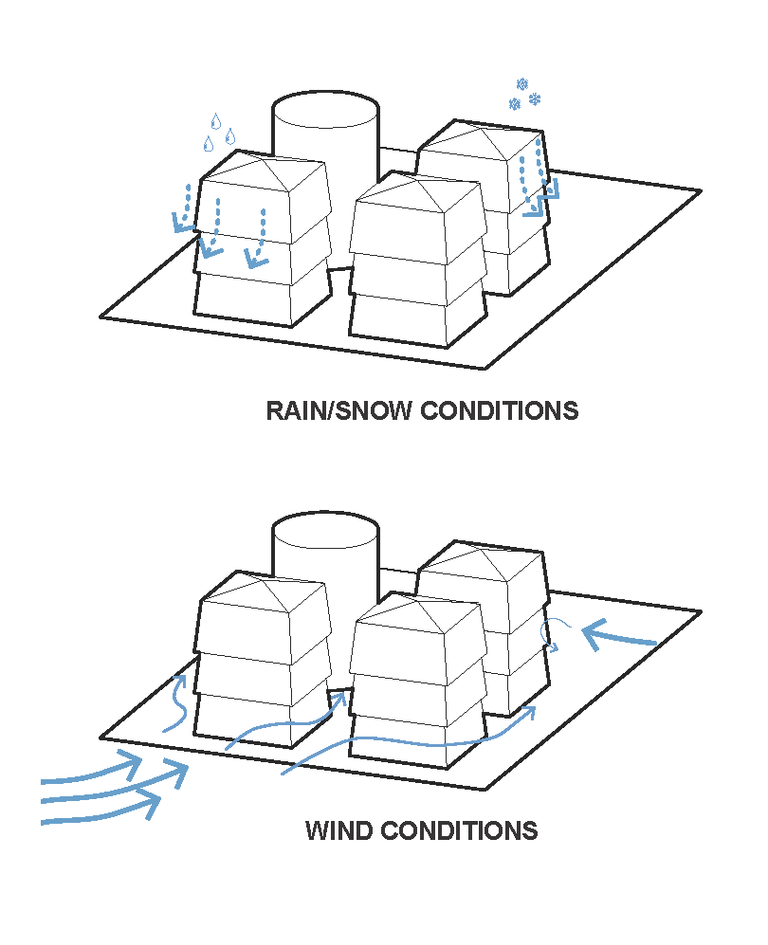
The building massing is fragmented into four smaller squares rather than one large block, reducing wind and snow loads. This approach allows wind to pass through and snow to accumulate less heavily on any surface, improving structural performance and longevity. The resulting form is resilient and climate-responsive, balancing architectural expression with environmental practicality.
Sharing the Space Between
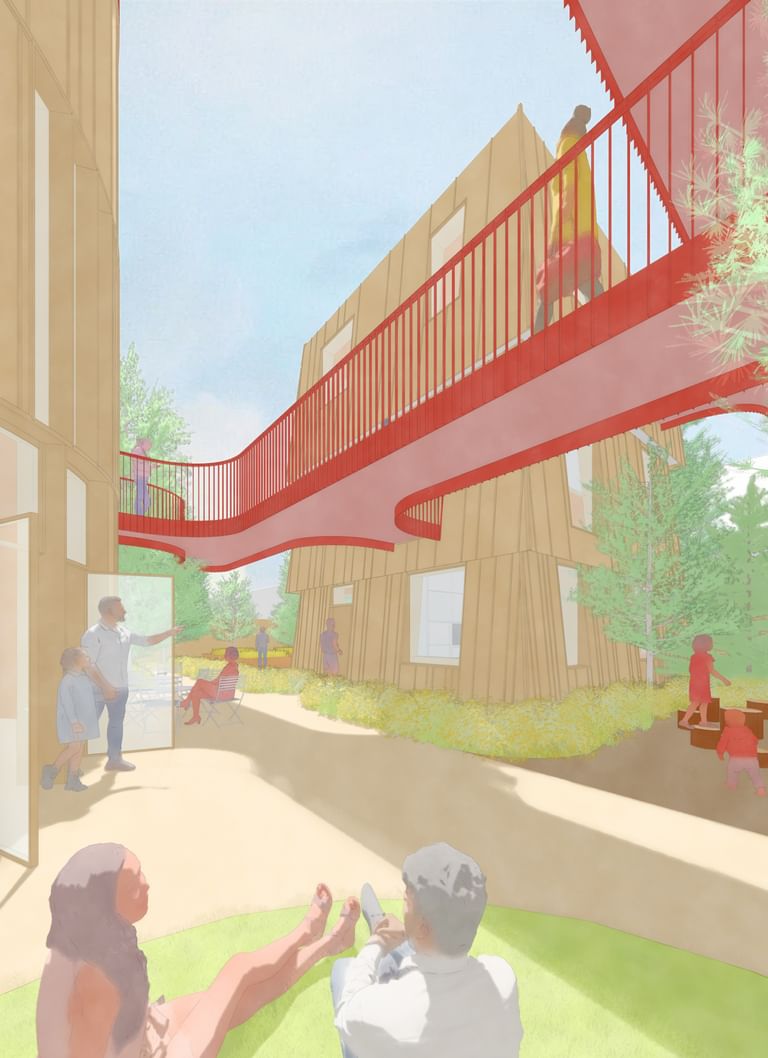
Movement throughout the development is conceived as an extension of communal life, with circulation intentionally serving as a catalyst for interaction. Horizontal bridges connect the four massings, enabling face-to-face encounters and casual engagement while minimizing the footprint of enclosed corridors. The central amenity cylinder anchors this network, bringing together shared programs, including the mailroom, lounge, laundry, and gym/wellness facilities, into a single, accessible hub that concentrates social activity.
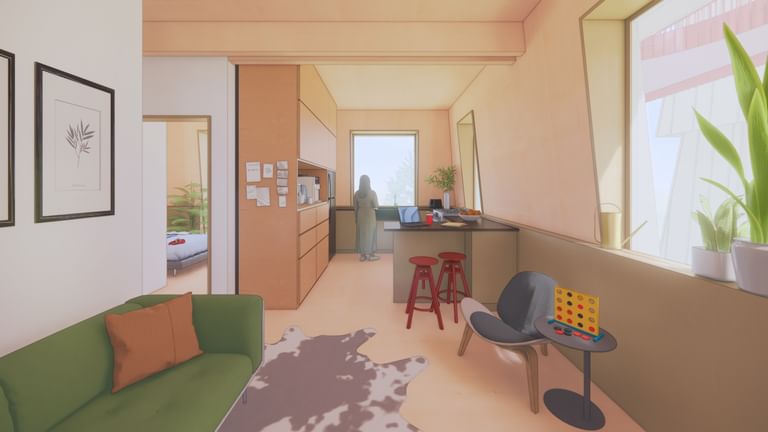
Mass Plywood Interior
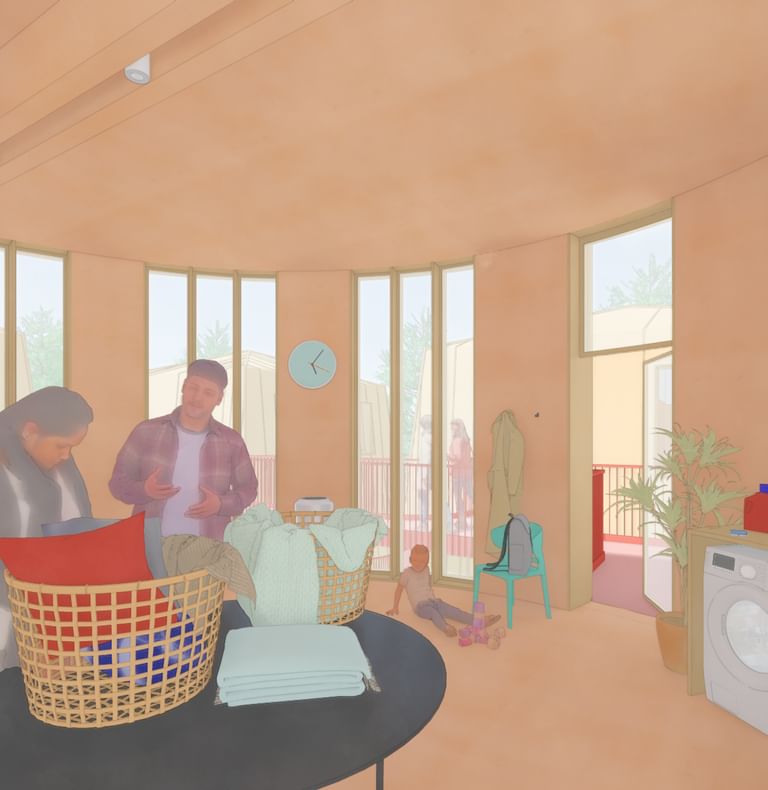
Constructed entirely from mass plywood, each unit provides a warm and natural interior that feels comfortable and inviting. The visible wood surfaces highlight the character of the material and give the space a sense of authenticity. Large windows bring in ample daylight, brightening the rooms and connecting the interior to the outdoors. Simple detailing and exposed structure emphasize the honest use of materials while maintaining a clean, modern look.
The open 24’ x 24’ (550 sf) floor plan is designed to be flexible and practical. It works well for a single resident or a small family, offering enough space for different living arrangements. The layout can easily adapt as needs change, whether for additional storage, a home office, or reconfigured furniture. Together, these elements create a modest yet thoughtful environment that supports comfortable, adaptable everyday living.